
What is data tokenization? This guide covers vaulted vs vaultless architectures, tokenization vs encryption, PCI/HIPAA/GDPR compliance, and implementation.
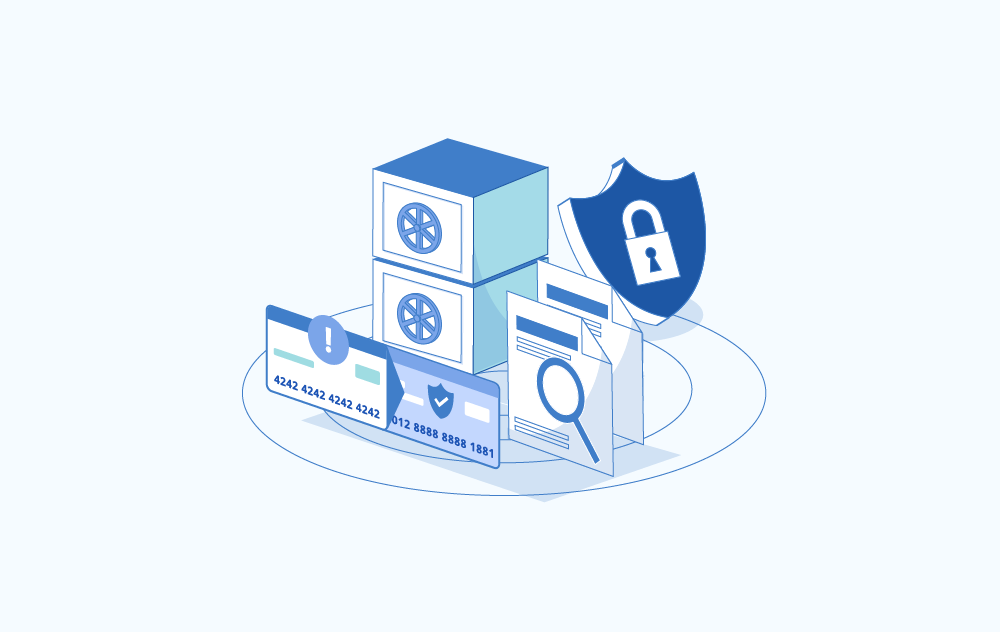
Data tokenization is one of the most effective ways to protect sensitive data (e.g., credit card numbers, Social Security numbers, medical records) without disrupting your analytics or operations.
If you have ever searched "what is data tokenization" or "what is tokenization," this guide answers both questions and goes further. It covers how data tokenization works, how it compares to encryption and data masking, which regulations it addresses, and how to implement a data tokenization strategy across your environment.
Data tokenization is the process of replacing a sensitive data element with a non-sensitive substitute called a token.
The token retains the original value's format and data type (i.e., a 16-digit credit card number becomes a different 16-digit number) but carries no exploitable meaning on its own.
IBM defines tokenization as a technique for removing sensitive data from business systems by replacing it with an indecipherable token. Modern data security platforms make this process automatic across your entire data estate.
The term "tokenization" appears across multiple disciplines, and the distinctions matter.
This article covers security tokenization exclusively.
Unlike encryption, where ciphertext retains a mathematical relationship to the original plaintext, a token has no algorithmic connection to the source value.
Reversing a token requires access to the token vault or the cryptographic key that generated it, not a decryption formula.
That distinction has direct compliance implications: under PCI DSS, encrypted cardholder data remains in scope, while properly tokenized data does not.
Organizations across financial services, healthcare, retail, and government use data tokenization to protect regulated data types.
Your data classification policies determine which fields to tokenize (e.g., PANs, SSNs, patient IDs, tax identifiers, etc.). and the tokenization system handles the rest.
Understanding how data tokenization works starts with the core process.
Your application sends a sensitive data value to the tokenization system. The system generates a token, stores the token-to-original mapping, and returns the token to the application.
From that point forward, your data security architecture operates on the token, but never the original sensitive data.
Here is how tokenization works in the two primary architectures.
Vaulted tokenization stores every token-to-original mapping in a secure database called the token vault.
When your application needs the original value (for example, to process a refund), it sends the token to the vault, which looks up the mapping and returns the original.
This is the traditional approach, used by most payment tokenization systems and legacy platforms.
The vault's strength is its simplicity: token generation is random, and the only way to reverse a token is through the vault itself.
Payment tokenization systems and legacy platforms rely on this model.
The trade-off is that the vault becomes a high-value target and a reality that data breach prevention strategies must account for. It must be hardened, encrypted at rest, backed up, and disaster-recovered; and at scale, vault lookup latency can become a bottleneck.
Vaultless tokenization eliminates the vault entirely. Instead of storing a mapping, the system uses a cryptographic algorithm (typically FF1 format-preserving encryption, standardized in NIST SP 800-38G) to derive the token deterministically from the original value and an encryption key.
The same input and key always produce the same token, and the process is reversible only with the key. Vaultless systems scale horizontally because there is no central database to query. The trade-off: key compromise means full exposure.
Your data security posture depends entirely on key management rigor.
Both architectures produce tokens that exit PCI DSS scope when the tokenization system meets PCI requirements.
Your choice depends on data volume, latency needs, and key management maturity.
The tokenization vs encryption distinction is not academic; it determines your compliance scope, your breach exposure, and whether your analytics pipelines can function on protected data.
Understanding tokenization vs encryption vs data masking is essential for choosing the right data security controls.
Encryption transforms plaintext into ciphertext using a mathematical algorithm and a key.
The ciphertext is reversible by anyone who possesses the key, and it retains a mathematical relationship to the original. For PCI DSS, that relationship means encrypted cardholder data stays in scope.
Data masking permanently obscures data—for example, by replacing a Social Security number with *--1234. Masked data cannot be reversed and has no utility for production analytics. It is designed for non-production environments like dev/test.
Hashing converts data into a fixed-length output using a one-way function. The same input always produces the same hash, which makes it vulnerable to rainbow table attacks without salting. Hashed data, like encrypted data, remains in PCI DSS scope.
Data tokenization is the only method that simultaneously removes compliance scope and preserves data utility for production analytics.
This is the core reason why tokenization vs encryption debates consistently favor tokenization for data-at-rest protection in regulated environments.
For a deeper comparison, see our guide to tokenization vs encryption vs masking.
Tokenized data exits your PCI DSS cardholder data environment (CDE). Every system that stores, processes, or transmits tokens instead of raw cardholder data drops out of your audit scope. That translates directly into fewer systems assessed, simpler SAQ types, and lower compliance costs.
When attackers exfiltrate tokenized data, they get nothing exploitable.
The average global data breach costs $4.44 million according to IBM's 2025 Cost of a Data Breach Report, and that figure rises to $10.22 million in the United States.
Data tokenization eliminates the sensitive data that makes breaches costly.
Organizations with strong security automation, including tokenization, cut their breach lifecycle by 80 days and saved $1.9 million on average.
Unlike masking or encryption, tokenized data retains format and referential integrity.
Your analytics pipelines, reporting tools, and downstream applications process tokens as if they were real data, because the tokens match the original format.
A tokenized PAN is still 16 digits. A tokenized SSN is still 9 digits. No schema changes required.
A single tokenization strategy can address PCI DSS, HIPAA, and GDPR simultaneously.
You tokenize the sensitive field once, and the token satisfies the protection requirements across all three frameworks. That eliminates the need for separate controls — separate encryption for HIPAA, separate pseudonymization for GDPR — that most organizations still maintain.
Credit card tokenization replaces Primary Account Numbers (PANs) in merchant environments with format-preserving tokens.
Payment tokenization enables recurring billing, refunds, and loyalty programs without storing cardholder data, and is the most widely deployed form of data tokenization in production today.
Since PCI DSS 4.0 became fully enforceable on March 31, 2025, the compliance incentive for payment tokenization has intensified: fewer systems in your CDE means simpler audits and reduced PCI non-compliance fines.
Healthcare organizations tokenize patient records, medical record numbers, and insurance identifiers to meet HIPAA de-identification requirements.
Healthcare data breaches averaged $9.77 million per incident in 2024, making the sector the most expensive for breaches.
Tokenization supports the HIPAA Safe Harbor method by replacing the 18 specified identifiers with tokens — and it enables analytics on de-identified datasets for clinical research.
Retailers use data tokenization on customer PII — names, addresses, email addresses, loyalty program data — alongside payment credentials.
Tokenization protects omnichannel transaction data across point-of-sale systems, mobile apps, and e-commerce platforms.
You can still run personalization algorithms and customer segmentation on tokenized data because the tokens preserve referential integrity.
Government agencies apply data tokenization to citizen PII — Social Security numbers, tax identifiers, benefits records — to meet FISMA and NIST 800-53 data security controls.
Tokenization enables secure data sharing across agencies without exposing raw identifiers, which is critical for inter-agency reporting and audit compliance.
Most competitors treat compliance as a one-line mention. Here is what the actual penalties look like for failing to protect sensitive data.
PCI DSS Requirement 3 mandates protection of stored account data. Tokenization satisfies this by removing cardholder data from your environment entirely. All PCI DSS v4.0 requirements — including the previously future-dated provisions — became fully enforceable on March 31, 2025.
Non-compliance fines escalate monthly:
If a breach occurs during non-compliance, you face card reissuance costs ($3–$10 per card), fraud losses, and forensic investigation fees ranging from $20,000 to over $500,000. PCI tokenization eliminates most of this exposure by shrinking your CDE.
Tokenization serves as a data de-identification technique under HIPAA's Safe Harbor method, which requires removal of 18 specific identifiers from protected health information (PHI).
However, not all tokenization qualifies as de-identification.
If the token-to-original mapping is accessible to the covered entity, the data may still be considered identifiable. For tokenization to qualify, the mapping must be segregated and access-controlled.
HIPAA penalty tiers for 2026, updated January 28, 2026 via the Federal Register:
Data tokenization of PHI can reduce your exposure across all four tiers.
Under GDPR Article 4(5), tokenization qualifies as pseudonymization – i.e., processing personal data so it can no longer be attributed to a specific individual without additional information.
Pseudonymized data remains subject to GDPR, but organizations that implement pseudonymization benefit from reduced obligations in certain processing contexts.
GDPR penalties reach €20 million or 4% of annual global turnover, whichever is higher. Cumulative fines exceed €7.1 billion since 2018, with €1.2 billion issued in 2025 alone. The largest single penalty remains Meta's €1.2 billion fine for cross-border data transfers.
Data protection platforms that implement pseudonymization via tokenization reduce your GDPR risk surface.
Under CCPA, tokenized data qualifies as de-identified when the token mapping is segregated and the organization maintains controls preventing re-identification.
Penalties reach $7,500 per intentional violation with no aggregate cap — exposure scales linearly with the number of affected records.
You cannot tokenize what you cannot find. Data discovery scans your structured and unstructured repositories – i.e., databases, file shares, cloud storage, SaaS applications – to locate sensitive data wherever it lives.
An estimated 80% of enterprise data is unstructured, meaning most sensitive data hides in places that traditional security tools never scan.
Once discovered, data classification assigns sensitivity levels – PCI, PHI, PII – to each sensitive data element. Classification determines data tokenization priority: cardholder data and patient records get tokenized first.
Unclassified dark data — the files and records your organization does not know exist — represents your highest risk surface. Data discovery and classification together form the foundation of any effective data security program.
Different data types require different token formats.
Your data tokenization policies should map directly to your regulatory requirements: PCI DSS for cardholder data, HIPAA for PHI, GDPR for any EU personal data. Getting this step right determines how tokenization works across your entire sensitive data lifecycle.
Use the comparison from the "How Does Data Tokenization Work?" section to guide your decision.
Many organizations deploy a hybrid approach — vaulted for some data types, vaultless for others.
Tokenization must cover every environment where sensitive data lives. Your cloud databases, on-premises data warehouses, and mainframe systems all need protection.
Agentless deployment eliminates code changes and application downtime as the tokenization system operates inline, intercepting data flows without requiring modifications to your applications.
Mainframe tokenization is a critical gap for most organizations. Most tokenization vendors require data to leave the mainframe before protection can be applied.
Agentless mainframe tokenization protects VSAM files, DB2 databases, and IMS records in place — then moves tokenized data safely to cloud environments.
Tokenization is not a set-and-forget deployment.
You need continuous monitoring of tokenization coverage to ensure that new data sources, applications, and cloud workloads are covered.
Audit trails for every detokenization request – who accessed the original value, when, and why – are essential for regulatory examinations.
Review your policies periodically as regulations evolve: PCI DSS 4.0 introduced new requirements, and GDPR amendments continue to refine pseudonymization guidance.
Tokenization is not a silver bullet, and acknowledging its trade-offs is part of making an informed data security decision.
Many organizations treat data tokenization as a PCI tool. They tokenize cardholder data to reduce PCI scope, then deploy entirely separate controls for HIPAA (encryption plus access controls) and GDPR (pseudonymization plus consent management).
That approach creates three parallel data security stacks, three sets of policies, and three audit trails.
A single data security management strategy can address all three frameworks with one tokenization layer.
The workflow:
This approach extends to hybrid environments.
Mainframe-to-cloud tokenization protects legacy data in place — tokenize on the mainframe, then move tokenized data to your cloud data warehouse.
The tokenized data is safe in both environments without re-platforming your legacy applications. Multi-cloud security works the same way: one tokenization policy follows the data across AWS, Azure, GCP, and on-prem.
Agentless deployment makes this practical. No code changes to existing applications. No agents installed on your mainframe. The tokenization system operates inline, intercepting and protecting data flows across every environment you operate.
Now you know what data tokenization is, how tokenization works, and why tokenization vs encryption comparisons favor tokenization for sensitive data protection.
Data tokenization is the fastest path to reducing compliance scope, minimizing breach impact, and maintaining analytics utility on protected data.
If your organization processes cardholder data, patient records, or customer PII across cloud, on-prem, or mainframe environments, a unified tokenization strategy addresses it all.
DataStealth discovers, classifies, and tokenizes your sensitive data in a single platform:

Bilal is the Content Strategist at DataStealth. He's a recognized defence and security analyst who's researching the growing importance of cybersecurity and data protection in enterprise-sized organizations.